Chapter 1 of 4
Why we’re here.
Everyone loves salmon. The ocean can’t keep up, and land farms have not yet filled the gap.
So salmon is farmed, mostly in sea cages far from the people who eat it. The United States imports about 500,000 t a year. Almost none is grown at home.2
RAS was never the wrong idea.
Growing fish on land, near the market, in a controlled environment, was always the right goal. Projects kept failing for one reason: conventional systems were never designed around the biology of intensive fish production.
Biology broke down
Water quality turned unstable at high biomass. Growth slowed and biological risk rose.
The product suffered
Off-flavor at harvest weight. Costly purging before sale. Inconsistent quality.
The economics never closed
Output below design capacity. High capital and operating costs. Complex systems with many moving parts.
Conventional systems remove waste. We convert it.
Next: Our journey
Chapter 2 of 4
Our journey.
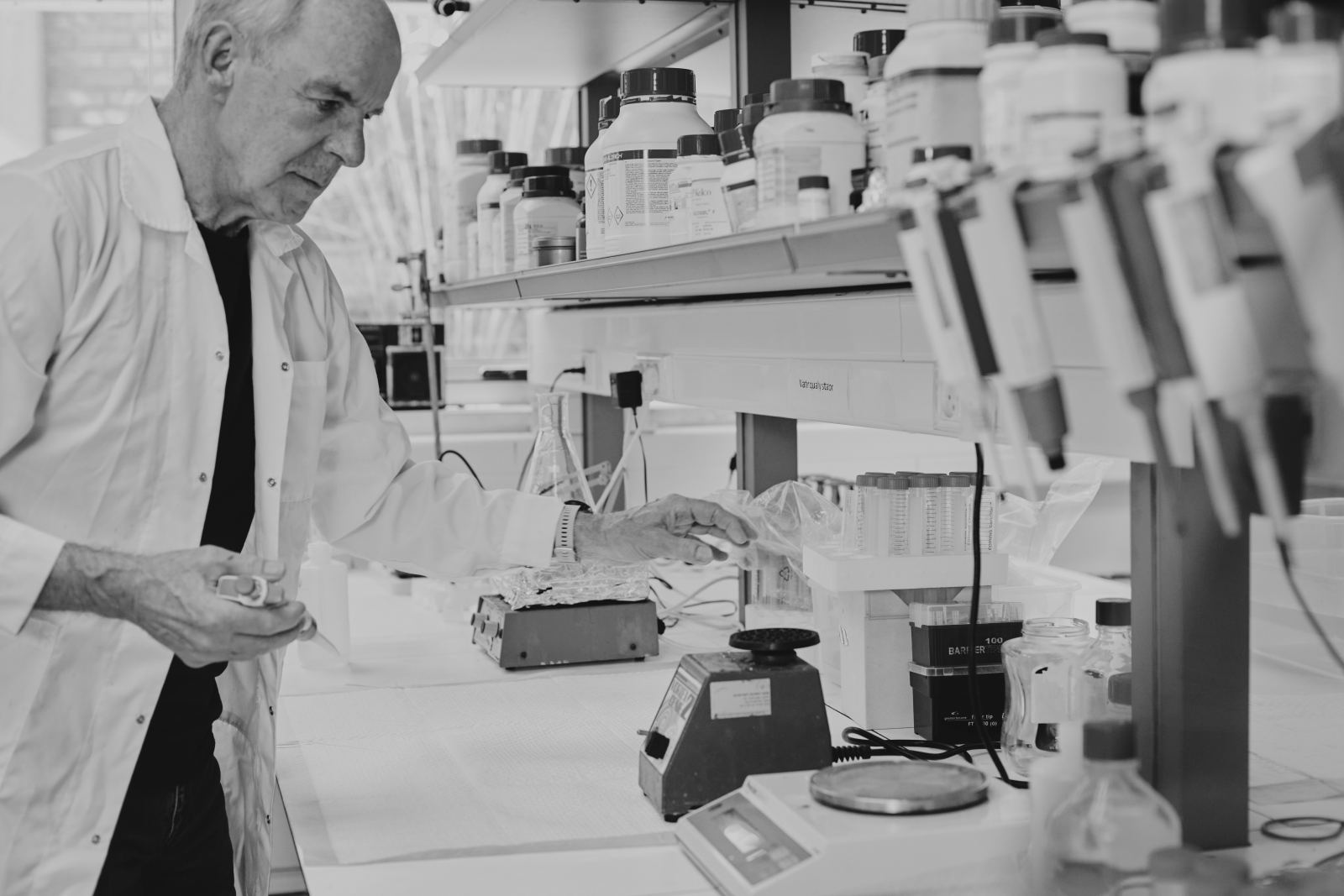
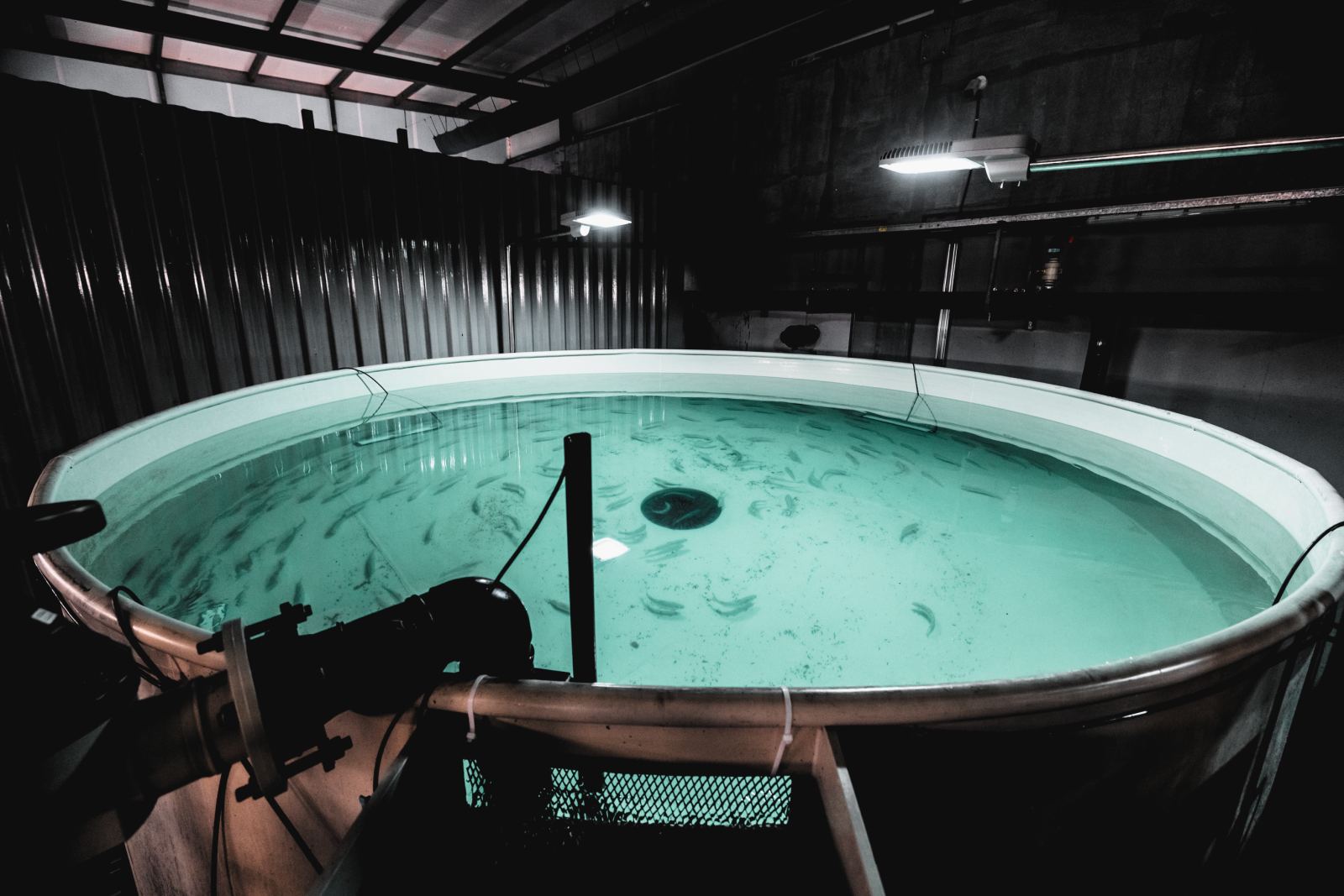
One question, twenty years of research, and a pilot that grows salmon in the same water.
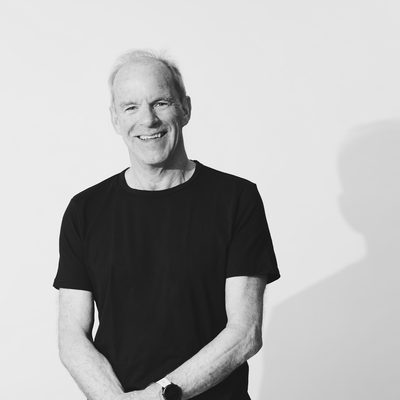
- The questionCan naturally occurring microbial processes keep water clean in intensive aquaculture, without continuously removing waste and replacing water? Prof. Jaap van Rijn asked it at the Hebrew University’s Faculty of Agriculture in Rehovot.
- RehovotTwo 5 m³ tanks ran the complete system on the same water for over 10 years. About 40 t of fish, across six species.
- 2022The company is founded.
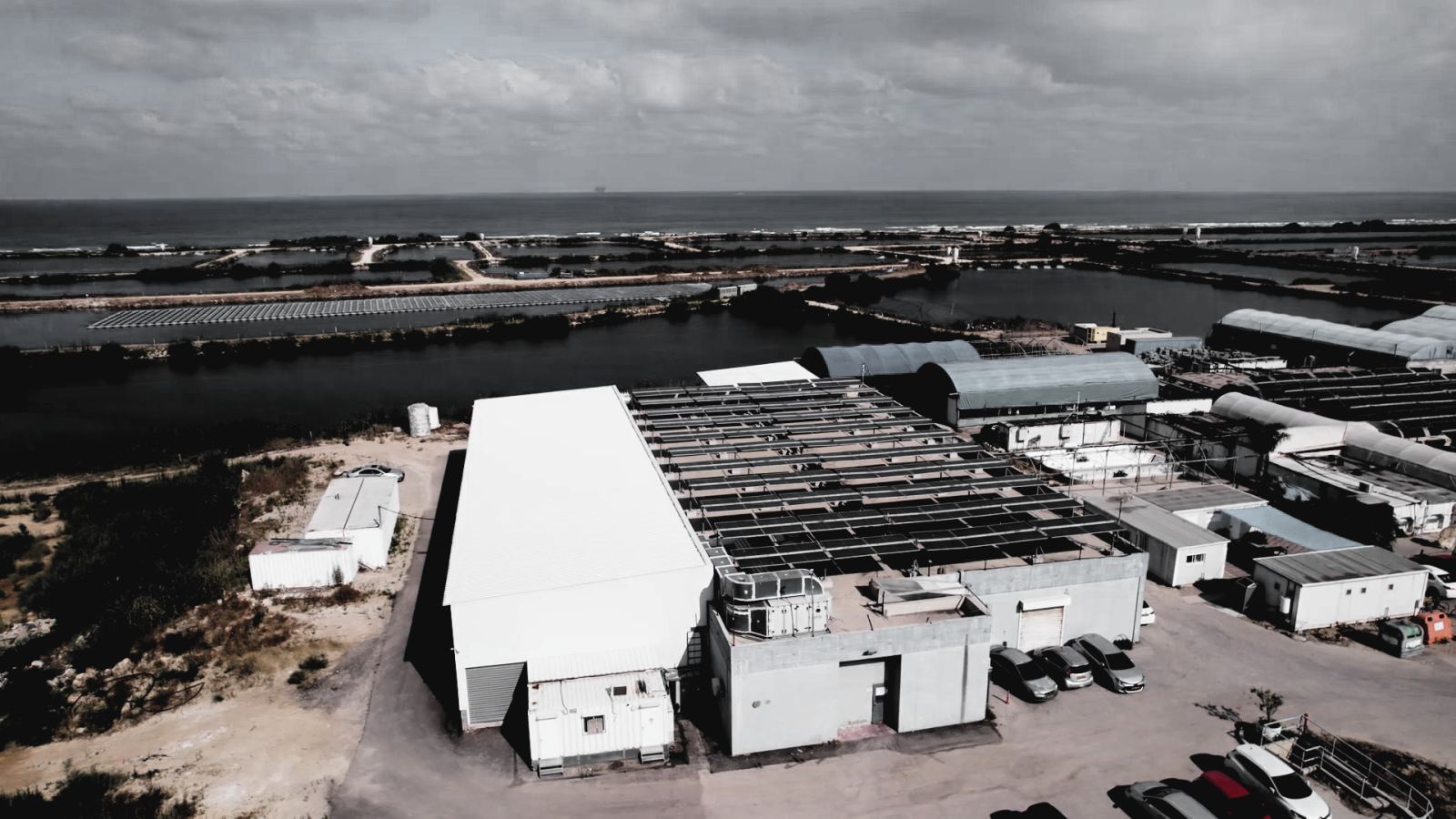
- 2024The Maagan Michael pilot opens with Dagon Aquaculture, built for twenty times the fish.
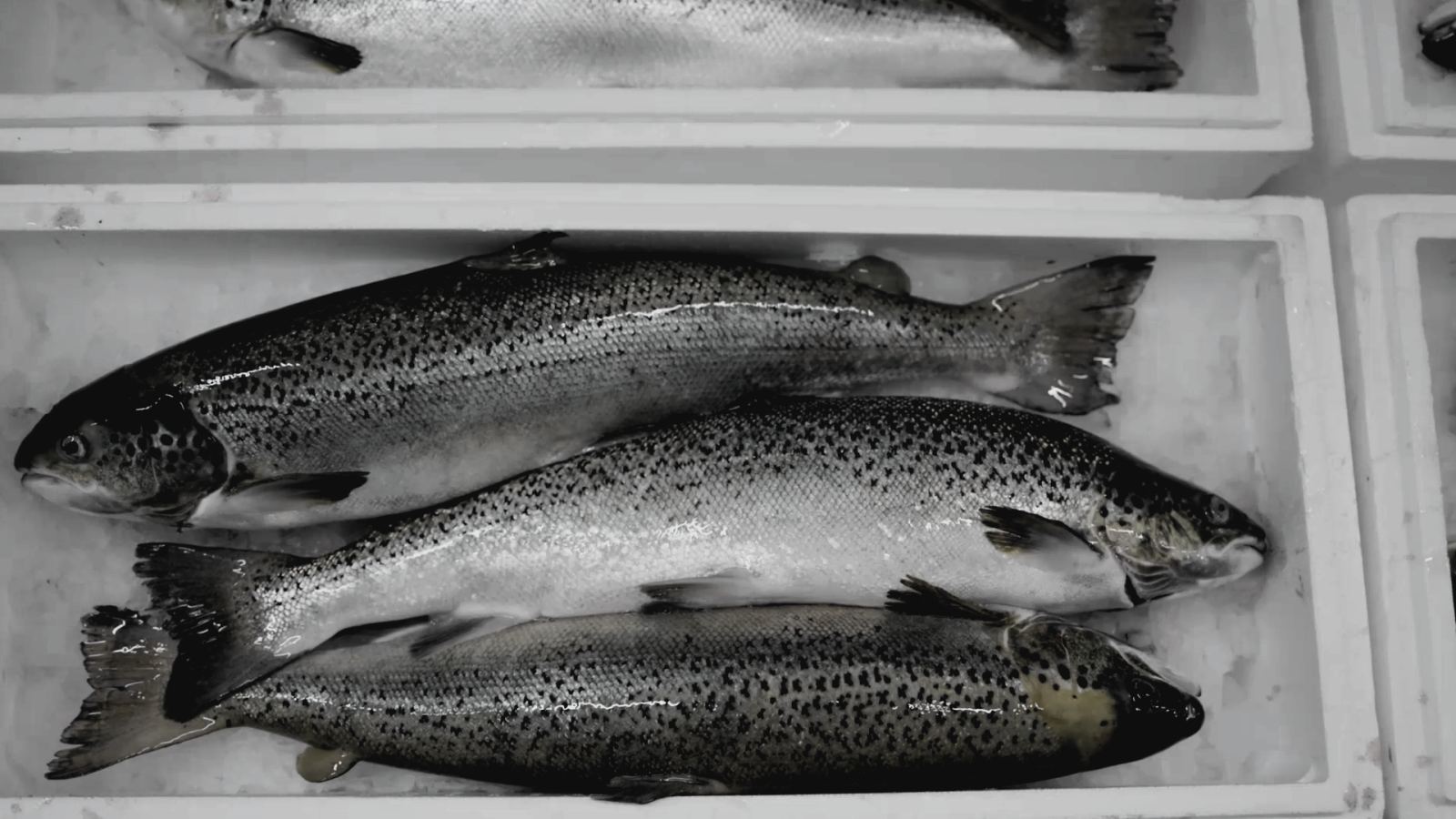
- Atlantic salmon6.5 kg in 23 months, across four batches.3
- NextThe standard 200 t module. In engineering through 2027; the first module is on plan for 2028.4
Next: About us
Chapter 3 of 4
About us.
A technology company. We design the module; farms own and run it.
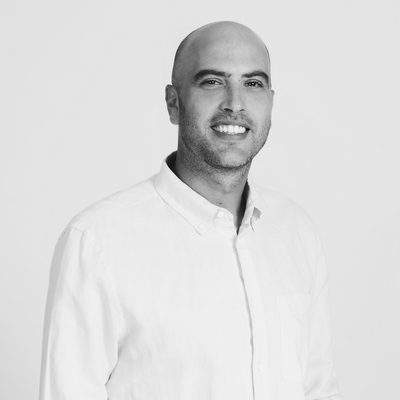
- Meiky TollmanCEO Americas · Washington, DCPartner, CEO and COO at Sabra, 2004 to 2019.
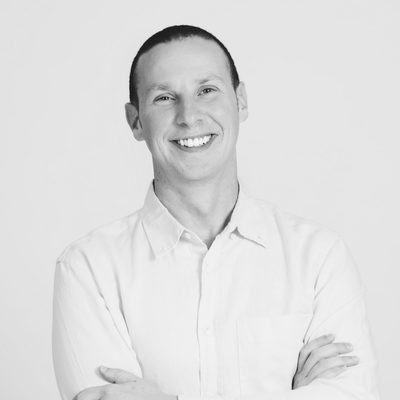
- Hagai MayerVP Engineering · Tel Aviv10 years in water treatment engineering. Formerly at Fluence.
Our pilot partner, Dagon Aquaculture
“The first salmon ever raised to market size in Israel grew here, on our farm. And we never needed a discharge permit.”
Next: Our mission
Chapter 4 of 4
Our mission.
Not a few giant farms. Thousands of small ones.
A better salmon.
- No antibiotics
- No hormones
- No pesticides
- No discharge
- No purging
 OrganicRaised without antibiotics, hormones or pesticides, in water that never meets the sea.
 SustainableZero discharge. About 50 L of fresh water per kg of fish.5 Grown next to the people who eat it.
 DeliciousNo off-flavor and no purging, thanks to our patented reactor. Harvested the day it is ready.
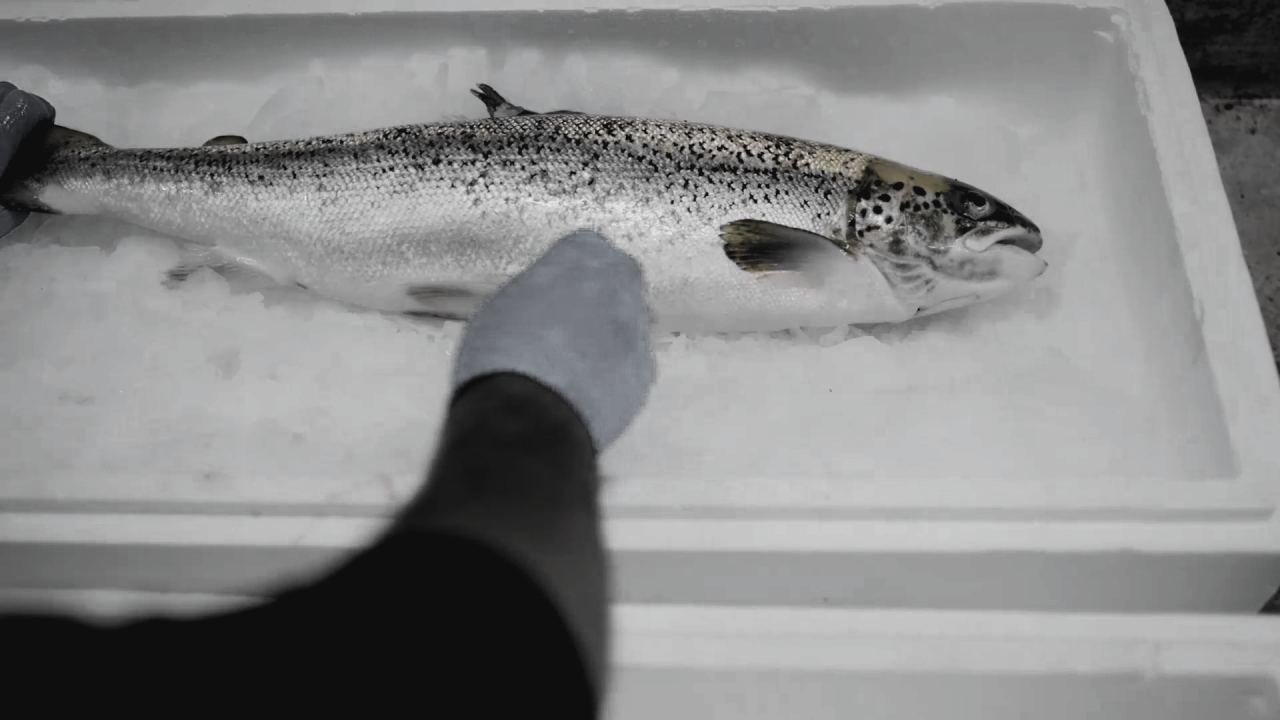 Good for youPremium Atlantic salmon, naturally rich in protein and omega-3, all year round.
2,500 modules.
All the salmon America imports today, grown at home.6
Each ring is 100 modules of 200 t a year. 800 modules would add one pound of salmon for every American, every year.
Chicken did this first.
A small, standard house let any farmer add chicken. Americans now eat 3.7 times more of it than in 1960.7
What we hold to.
- Biology first.We design around what the fish and the microbes need, then engineer the rest.
- The farmer owns the farm.We design the module and stand behind it. The farm is yours.
- Nothing discharged.The water stays in the loop. No pipe to the ocean.
- Say what is proven.Every number carries its source. What is still a target, we call a target.
- FAO, The State of World Fisheries and Aquaculture: global capture fisheries have held at about 90 million tonnes a year since the late 1980s. The curve is drawn from FAO totals by decade.
- FAO and NOAA: United States salmon imports, 500,753 t in 2023.
- Pilot data: four batches, 2024 to 2026, at Maagan Michael, in a pilot built for 27 t HOG a year. Benchmarks: about 36 months from hatch to harvest in conventional farming; Norway 2020 feed conversion 1.25 to 1.35 (Aas et al., 2022). Feed conversion is on live weight.
- Target design figures for the standard 200 t module, which is in engineering through 2027.
- Maagan Michael pilot. Fresh water replaces evaporation only: about 50 L per kg of fish, head-on gutted (HOG).
- Inland Ocean arithmetic on the module’s target capacity: 2,500 modules of 200 t a year equal the roughly 500,000 t of salmon the United States imports; 800 modules equal one more pound a person a year. NFI and NOAA.
- USDA data via the National Chicken Council: chicken eaten per person in the United States, retail weight, 28 lb in 1960 and 104 lb in 2025.