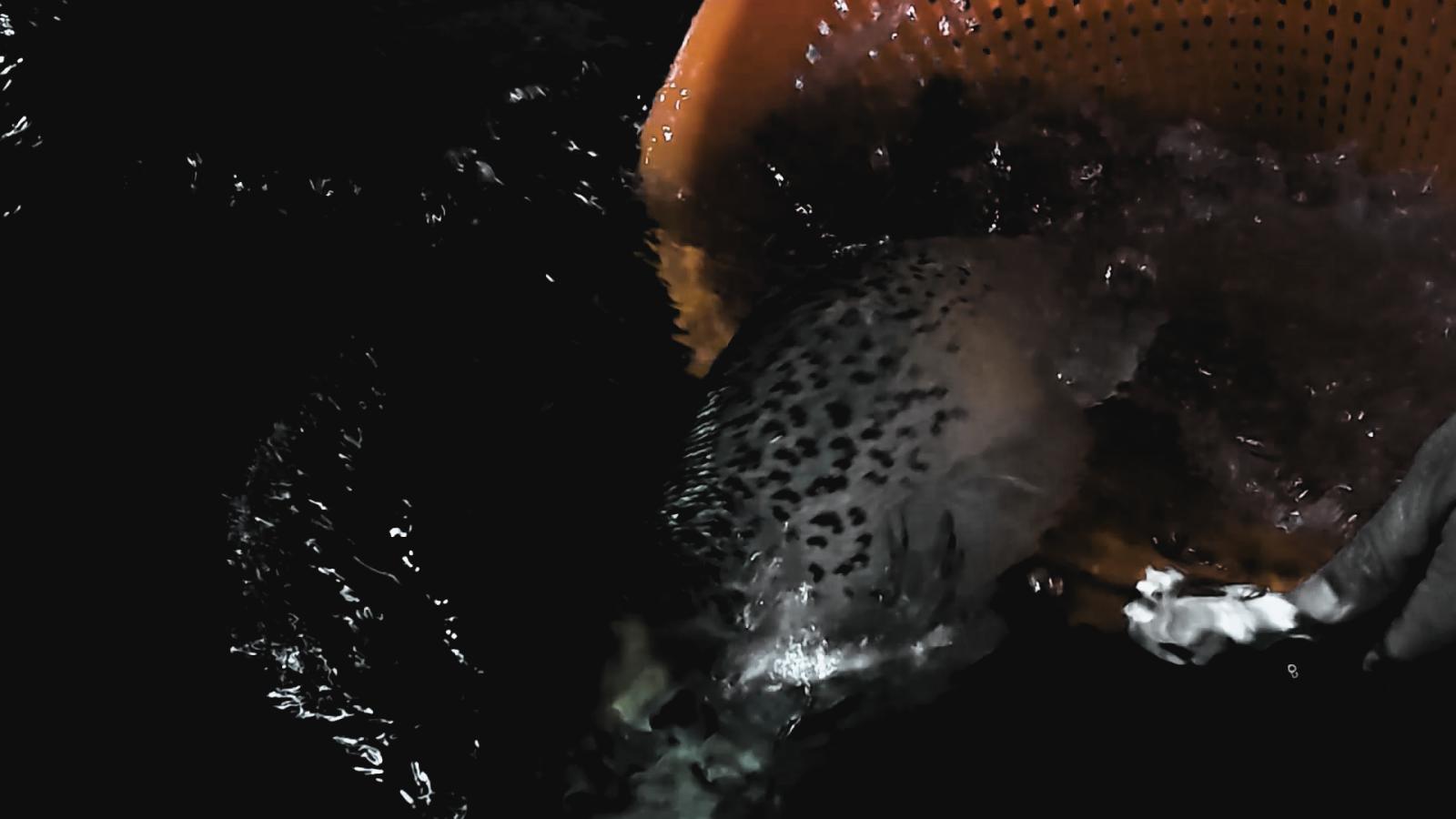
Salmon. Anywhere.
Small, profitable salmon farms that need only land and power.
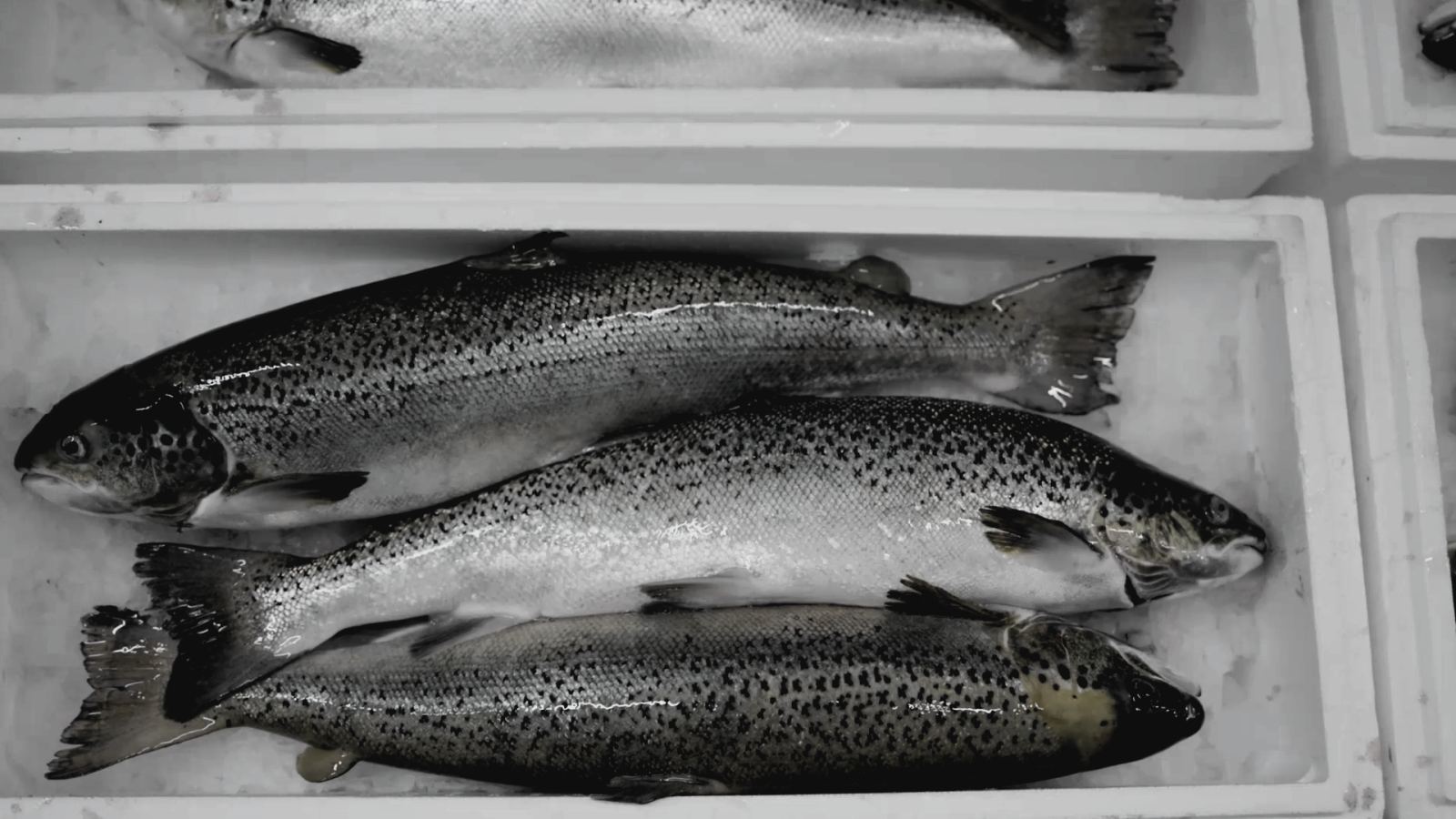
Proven at our pilot, Maagan Michael
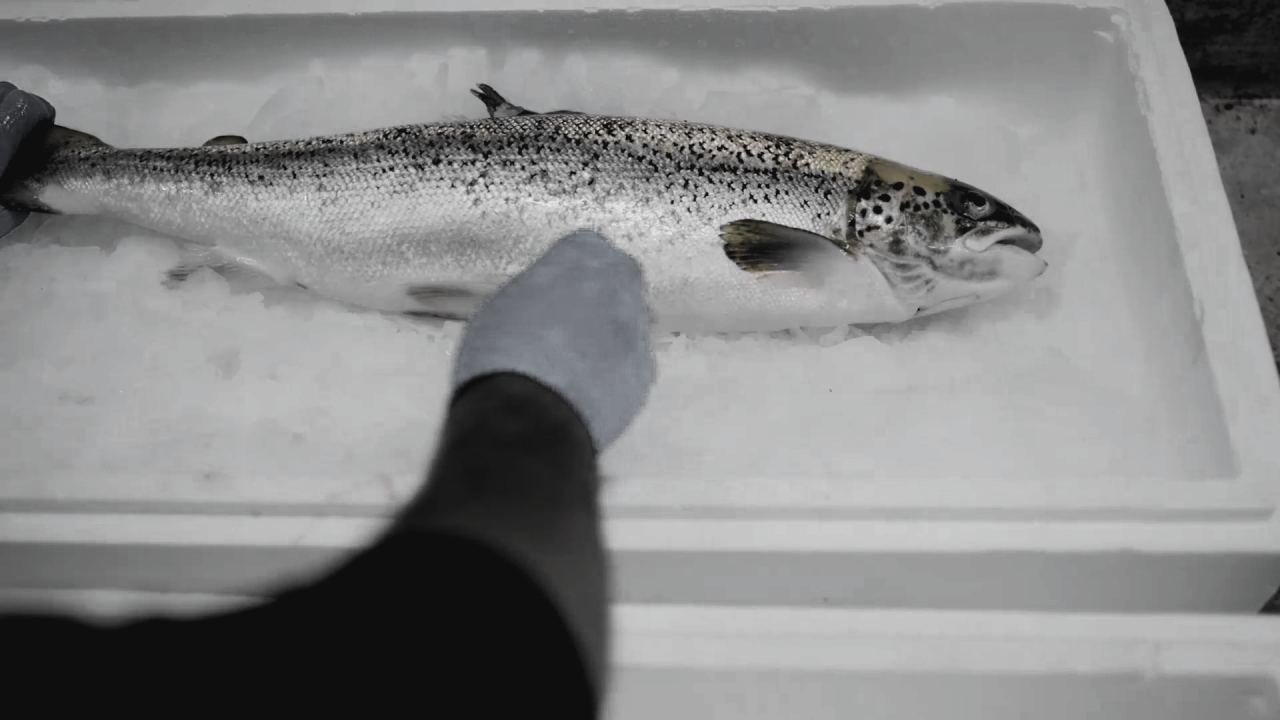
“The first salmon ever raised to market size in Israel grew here, on our farm. And we never needed a discharge permit.”
The US imports about 500,000 t of salmon a year. Almost none is grown at home.2 Why we’re here
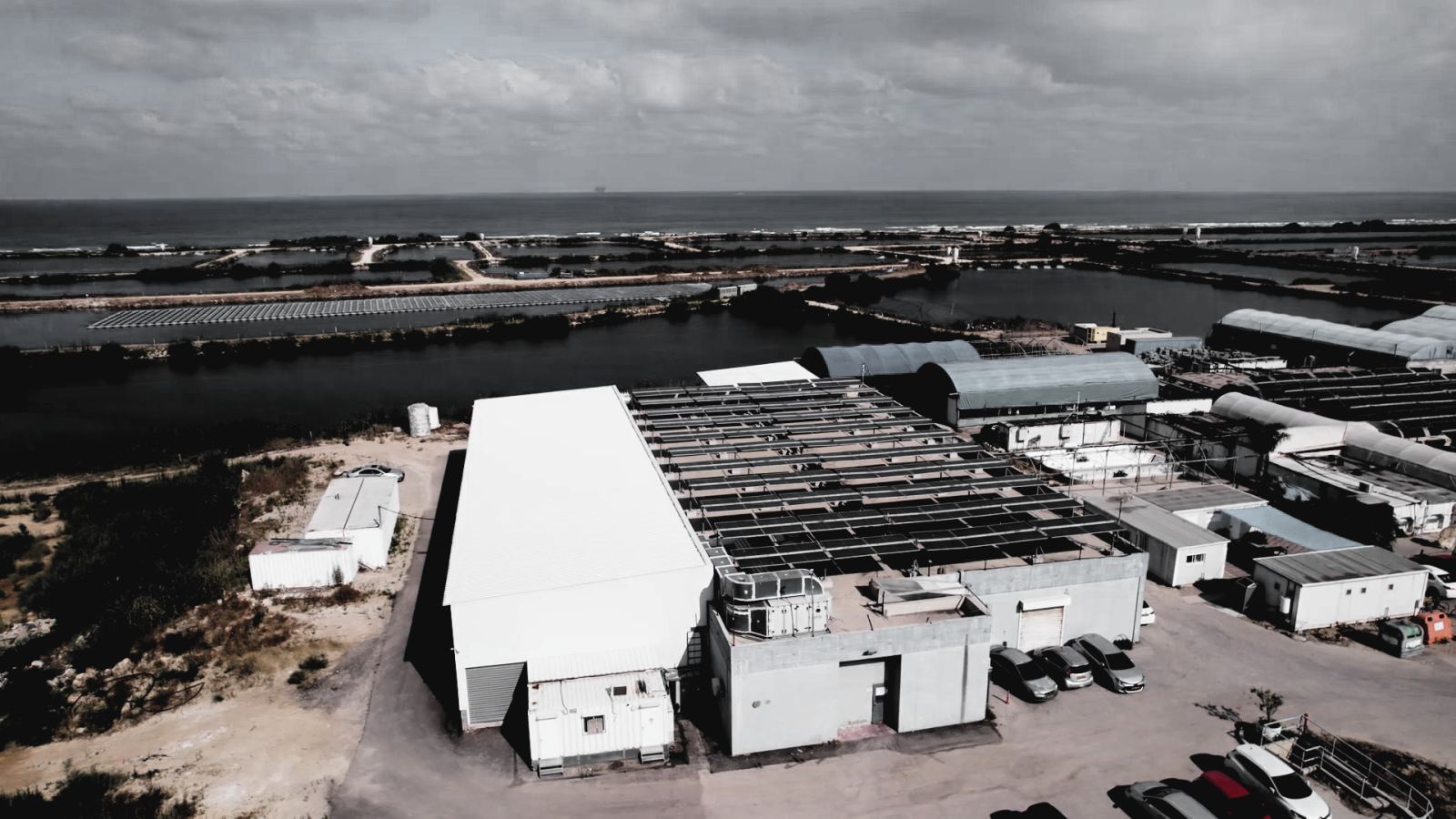
The pilot at Maagan Michael, beside the Mediterranean.
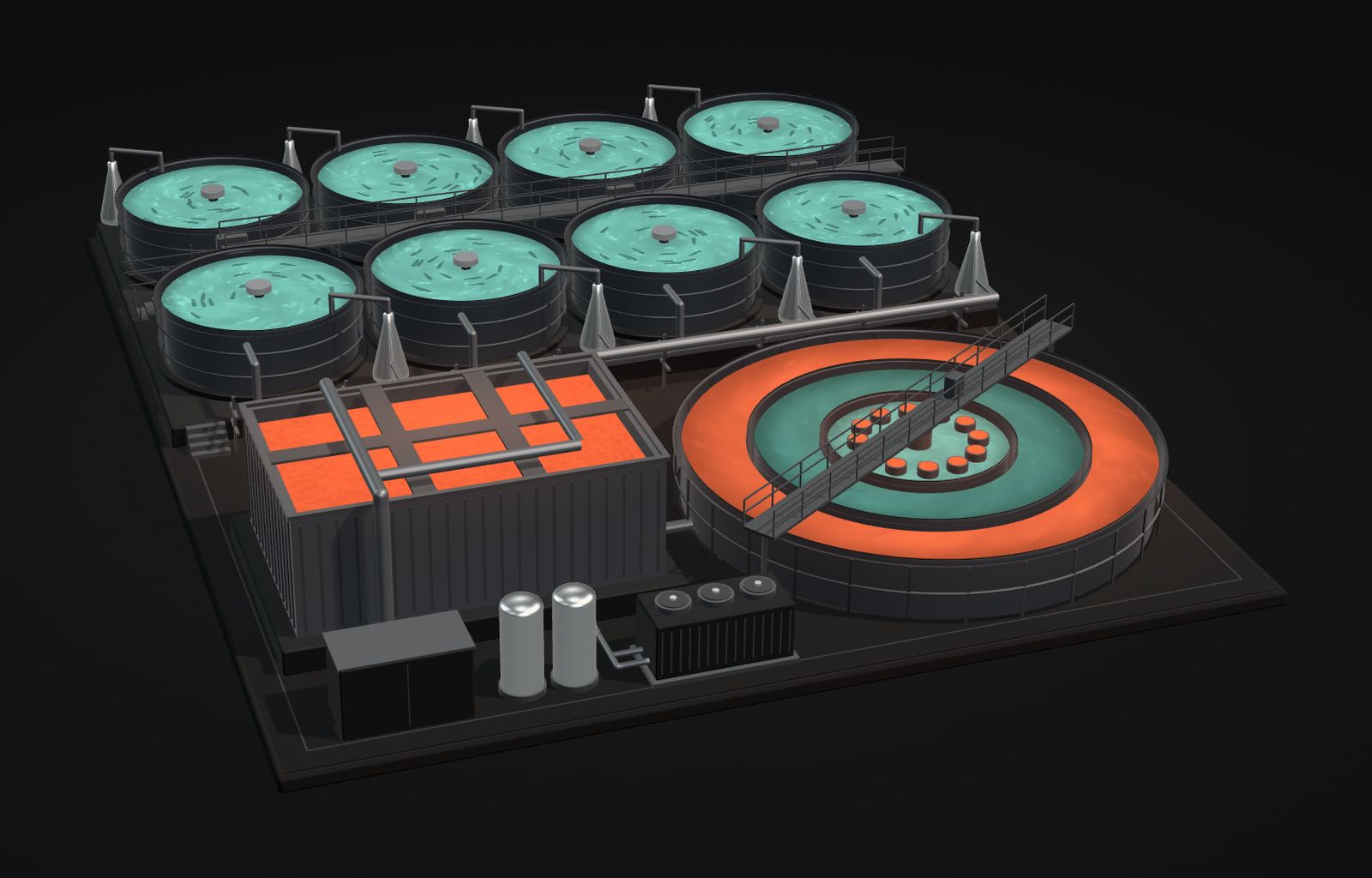
The water cleans itself. A farm needs only land and power.
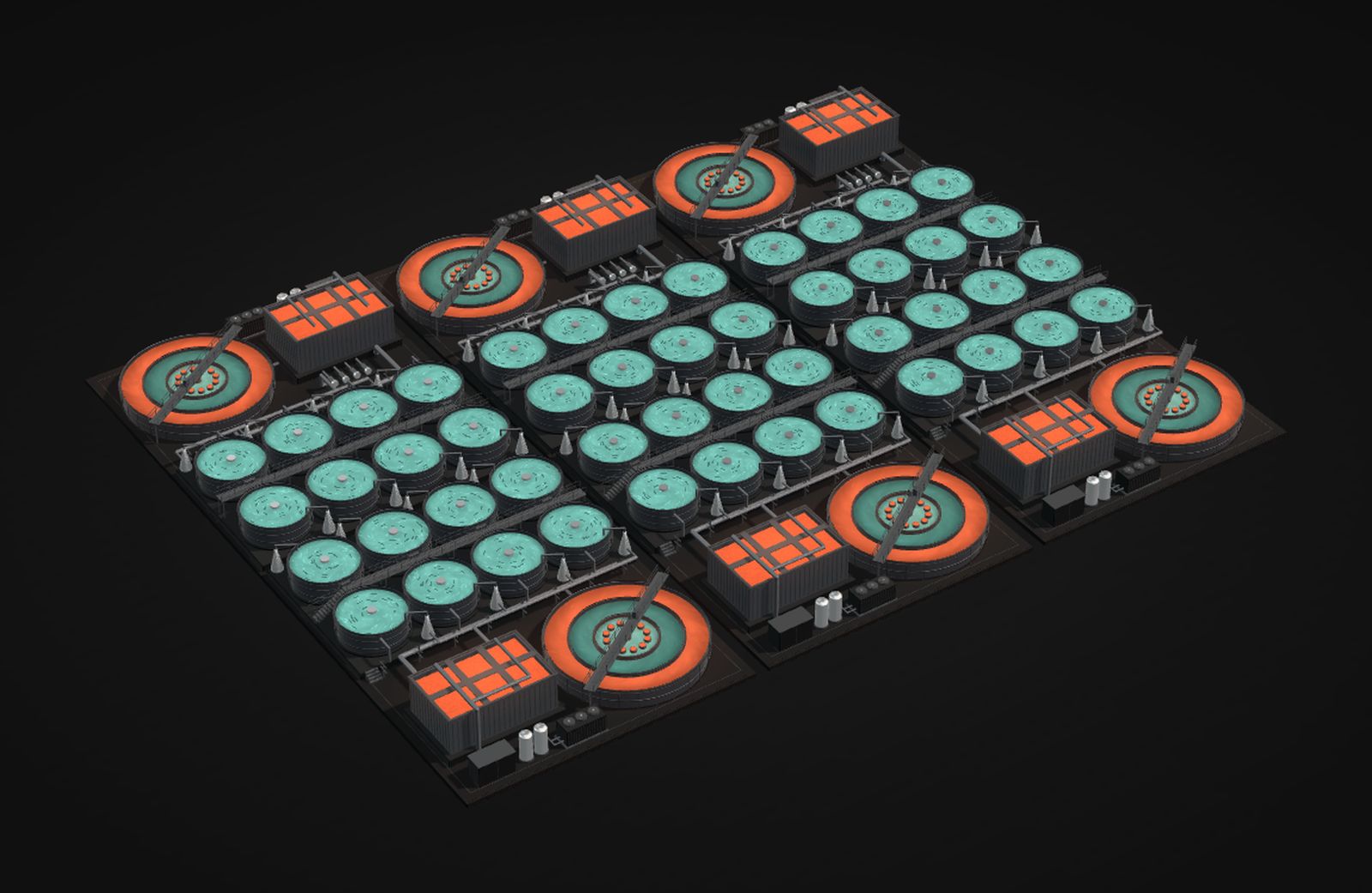
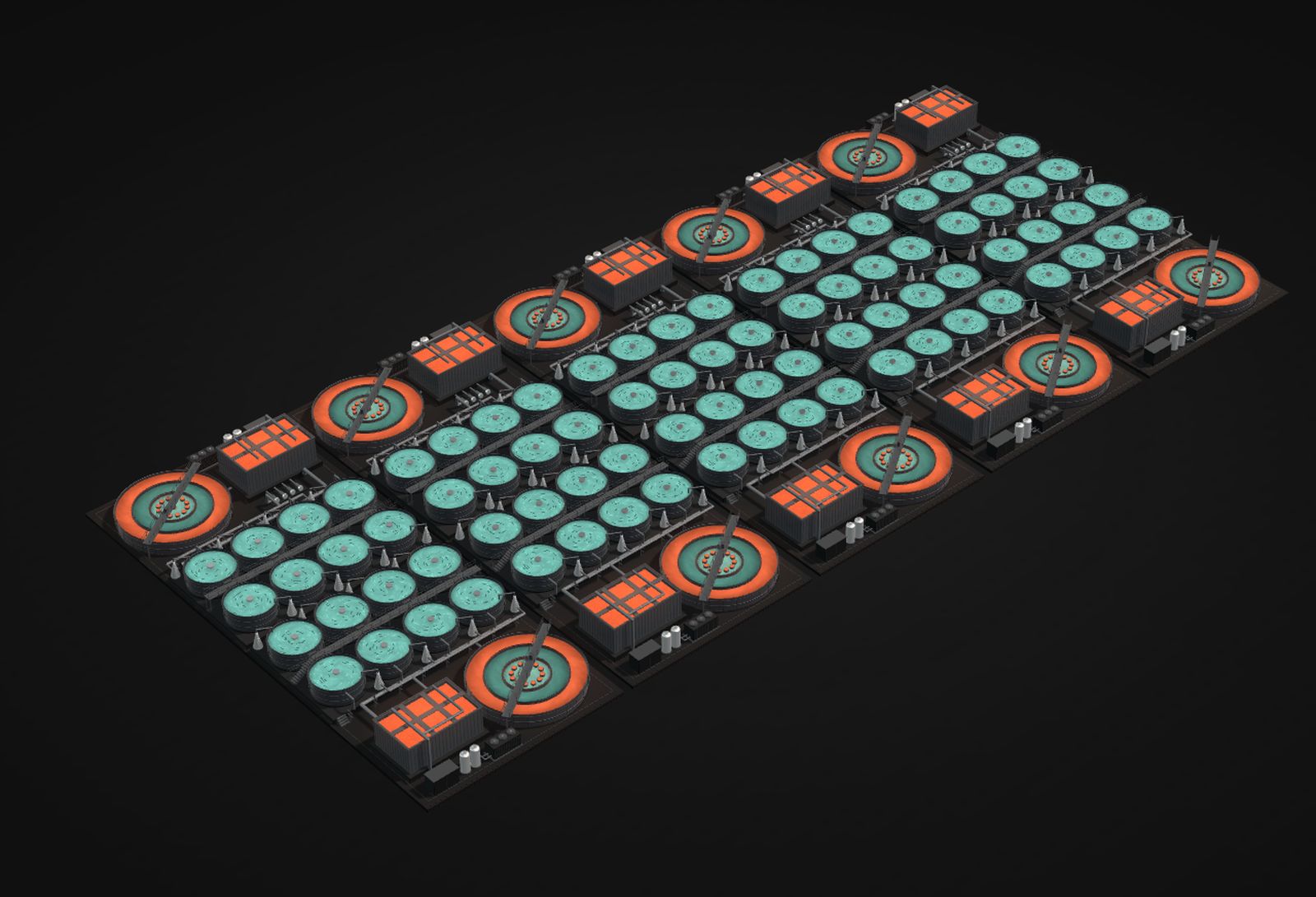
Illustration of the 200 t module design.
Biology cleans the water.
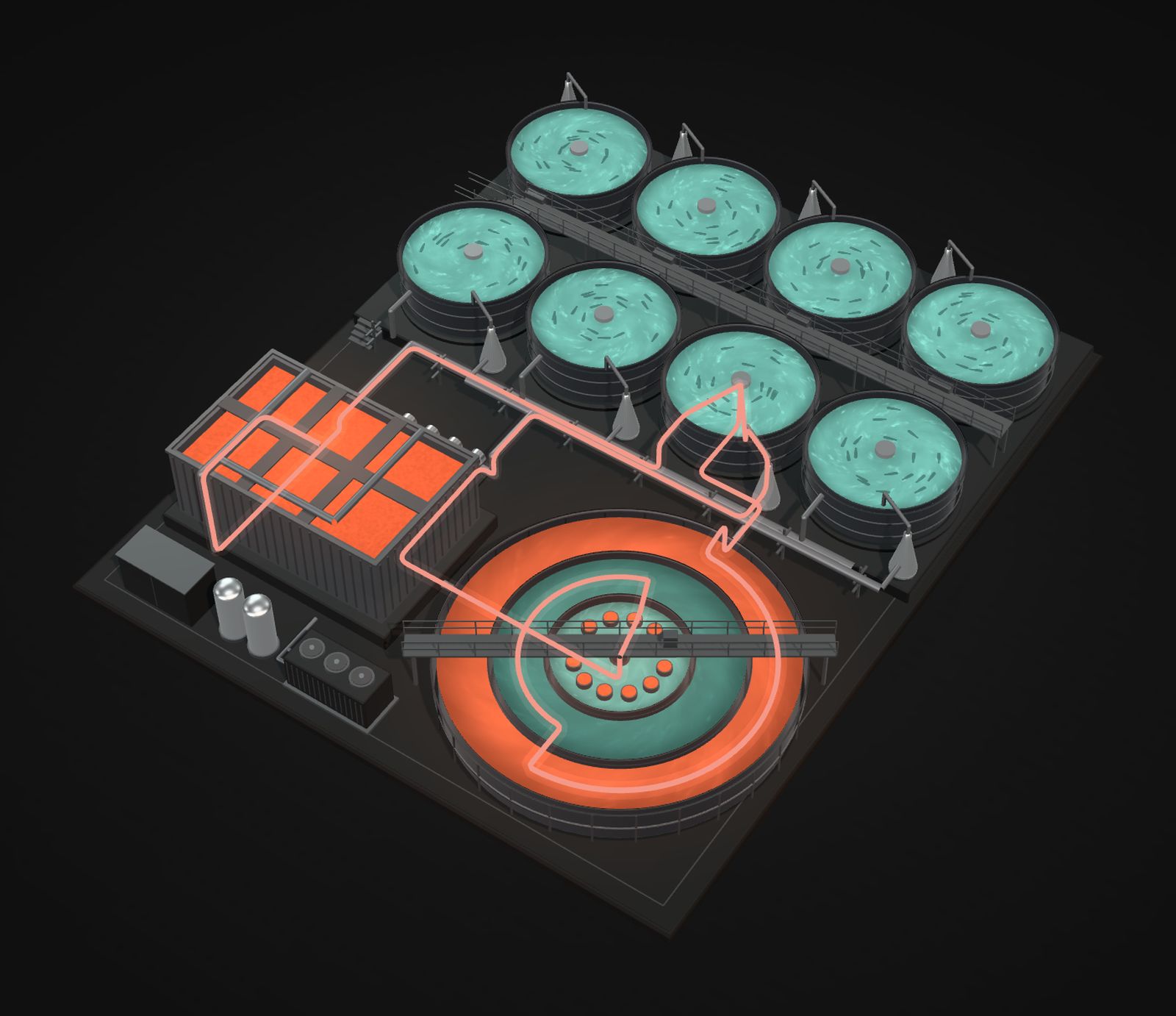
Microbes digest the waste. The same water returns to the fish.
Zero discharge. About 50 L of fresh water per kg of fish.3
How it works
Other systems remove waste. We convert it.
Water from the fish tanks splits between two treatment paths. A third stage protects quality. All three are biological.
- 1Patented
Sludge digestion unit
Fish waste settles here. Microbes eliminate the waste, the organic matter and the nitrate. What leaves is carbon dioxide and nitrogen gas.
- 2
Biological trickling filter
Water rains through a tower of media. Microbes convert the ammonia, and the falling water sheds its carbon dioxide.
- 3Patented
Off-flavor elimination reactor
Removes the compounds behind a muddy taste, continuously. Fish are harvested whenever they are ready.
Stage 1, up close Patented
Waste settles. Microbes do the rest.
- Waste settles. Fish waste sinks into a concentrated layer at the bottom of the basin.
- Microbes break it down. Naturally occurring bacteria turn the organic matter into simpler compounds.
- Nitrate is removed. Other bacteria feed on those compounds and turn nitrate into nitrogen gas.
- Only gas leaves. The waste ends as carbon dioxide and nitrogen. The water goes back to the fish.
One standard 200 t module.
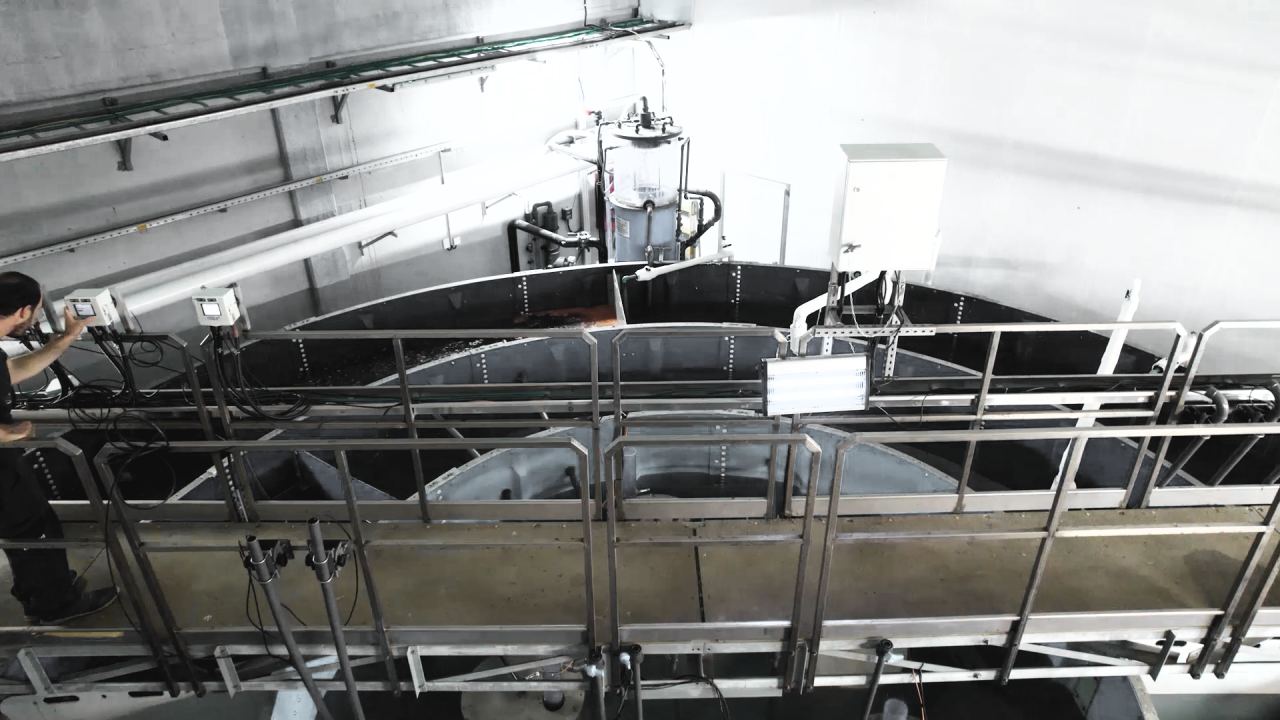
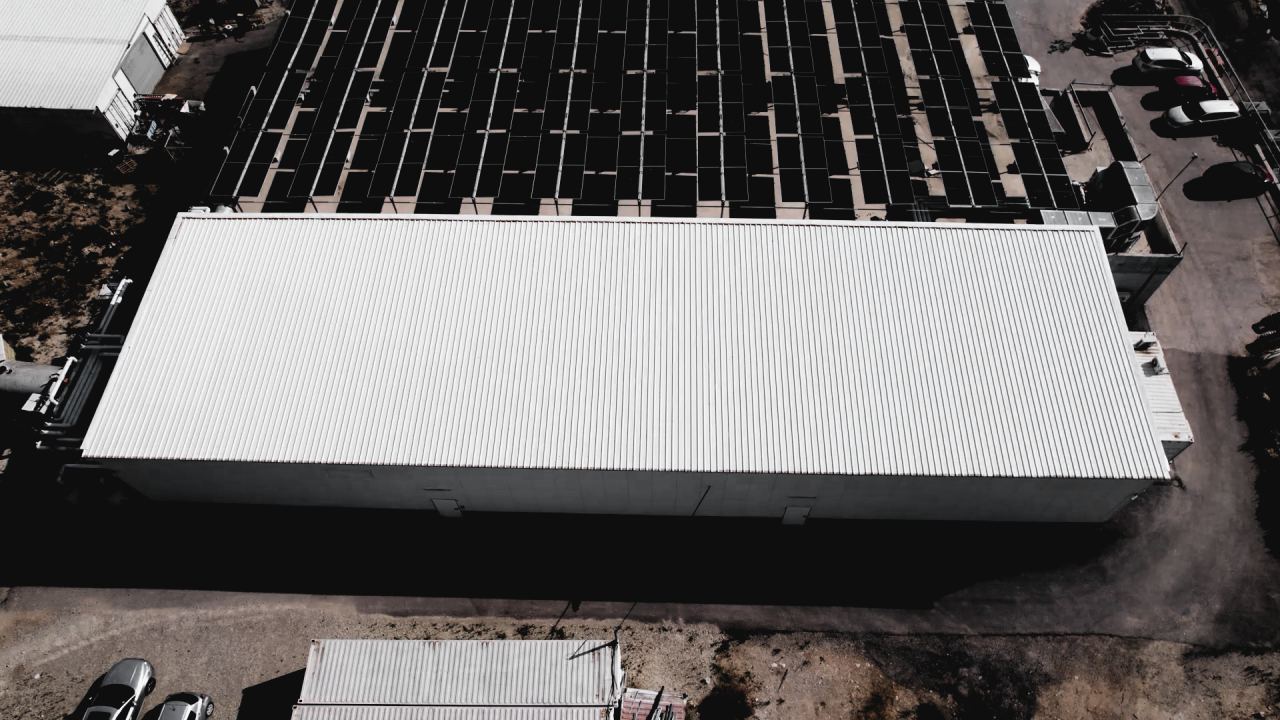
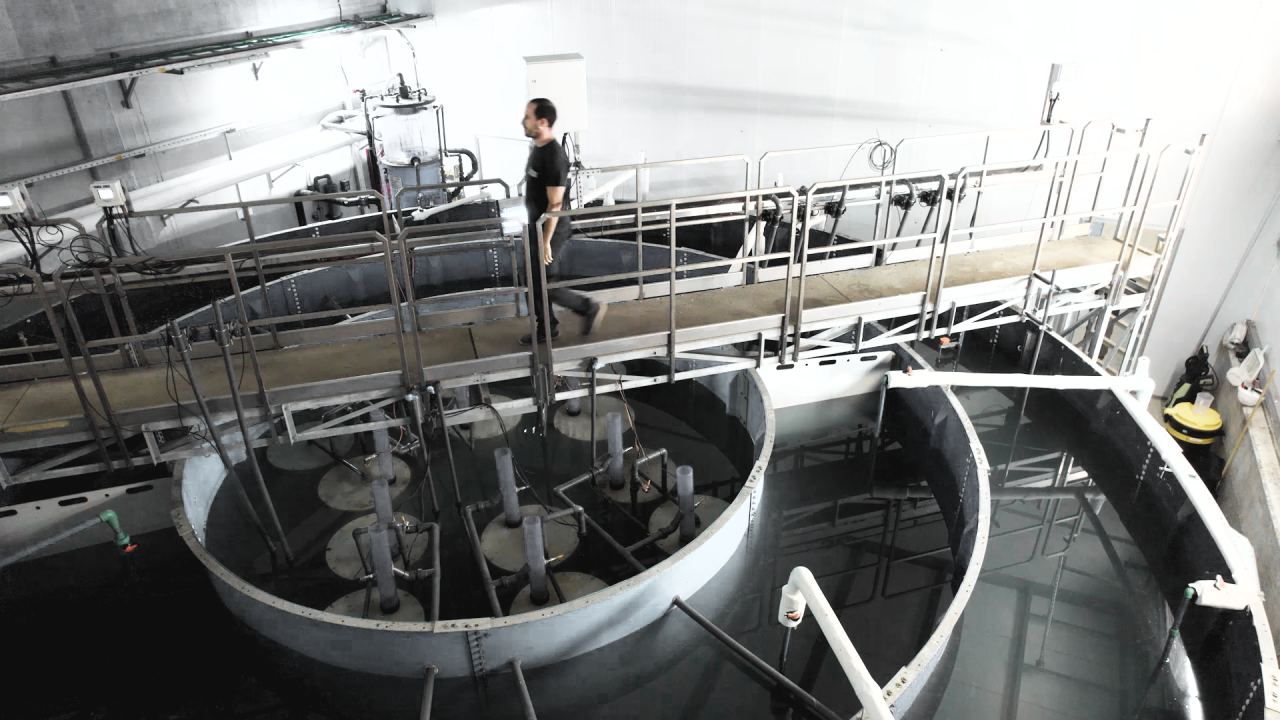
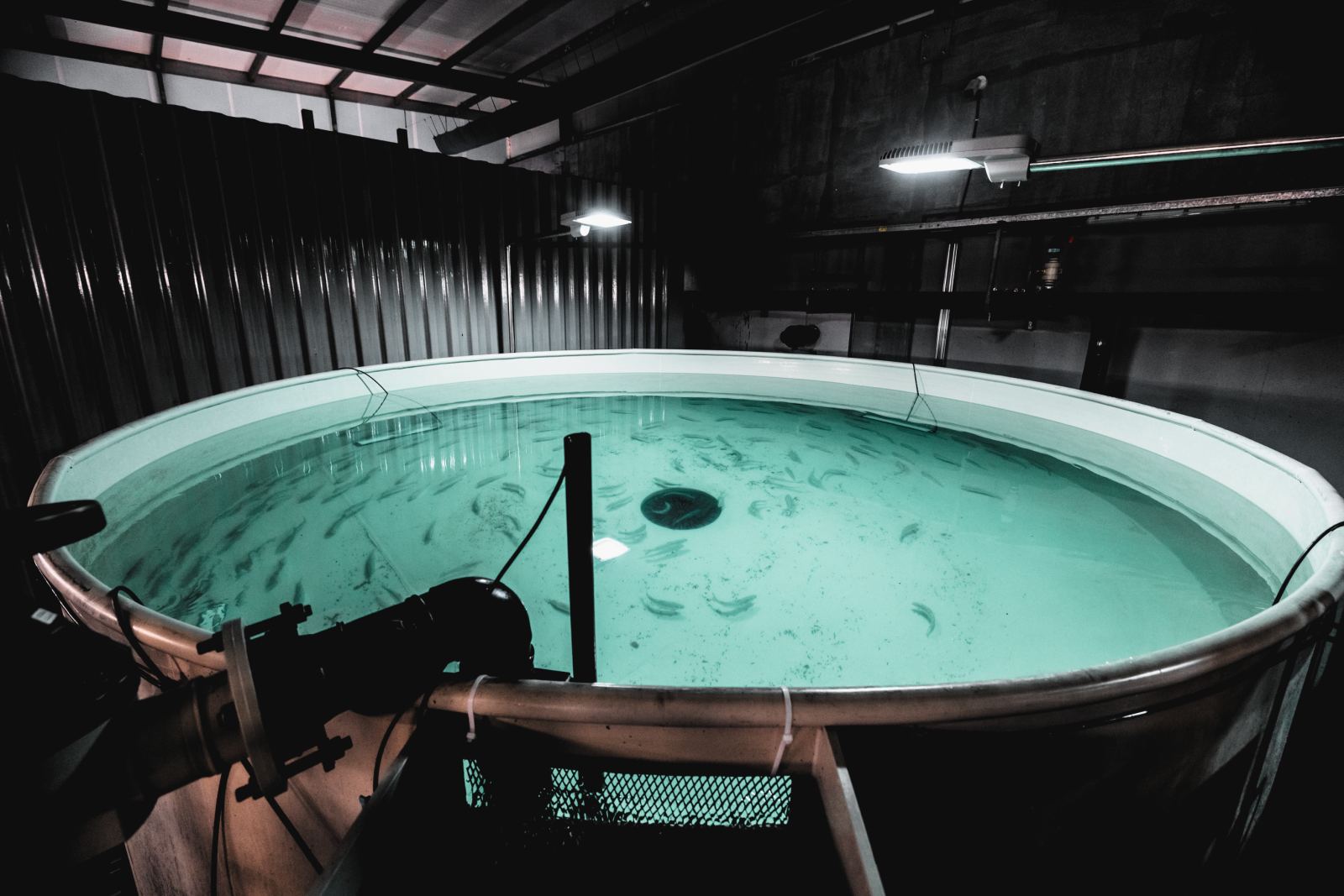
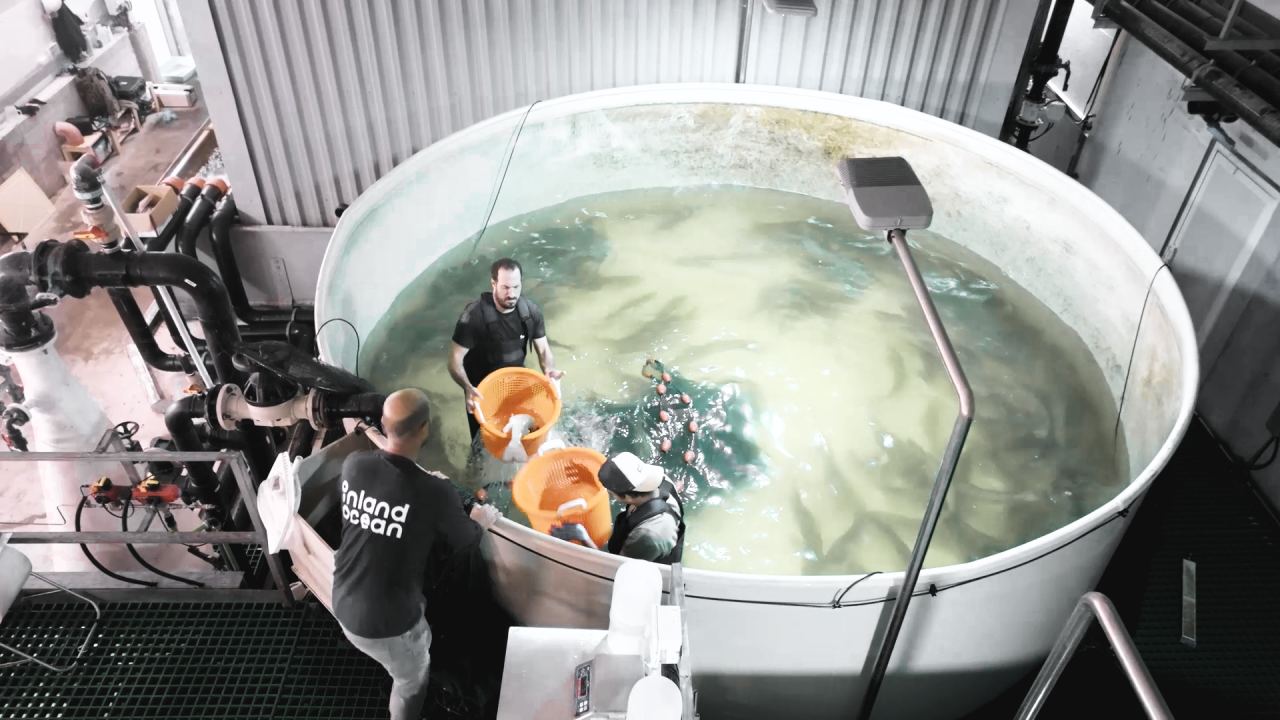
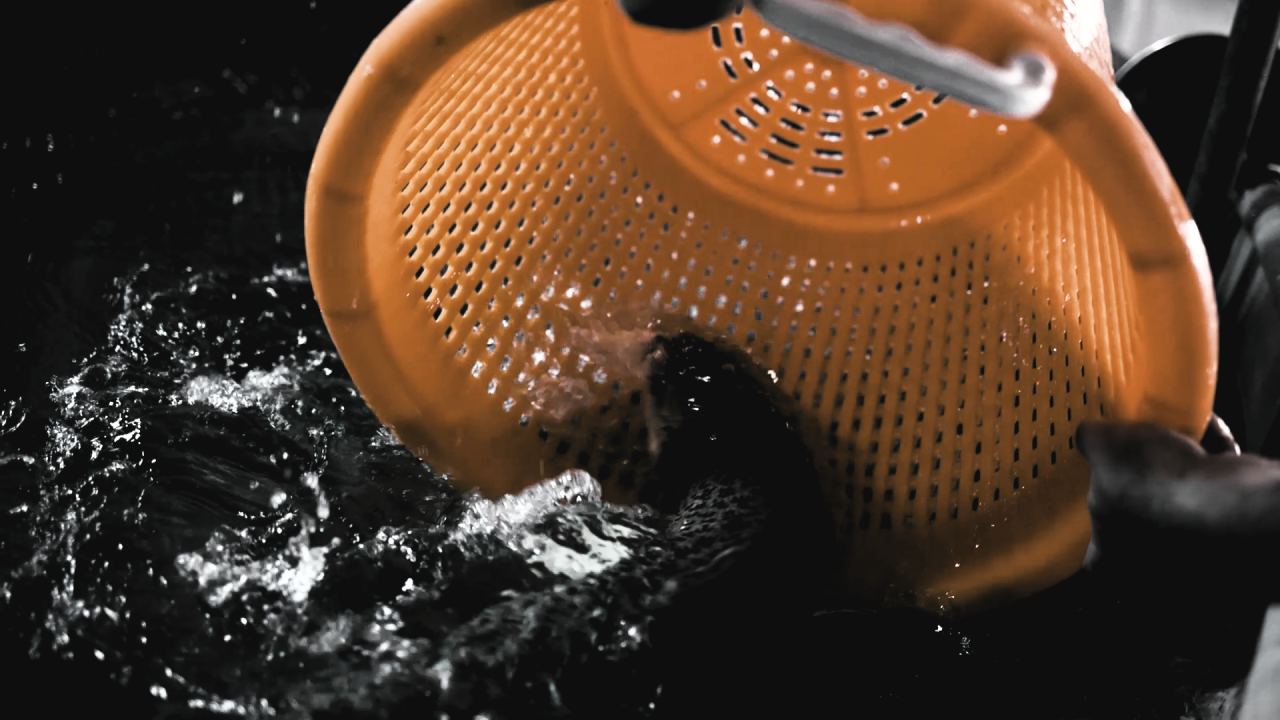
Inside the pilot
Built with Dagon Aquaculture at Maagan Michael.
Why raise your own salmon?
Fish farmers
A higher-value fish, on the same farm.
- You bring
- Land, power, a crew and your own buyers.
- You get
- Salmon alongside what you grow today, on the site you already run.
Crop and livestock farmers
Add salmon the way you’d add a chicken house.
- You bring
- Land, a power line and two people.
- You get
- A new crop in one standard building, with our control room behind it.
Salmon producers
Grow next to your market.
- You bring
- Know-how and customers.
- You get
- Year-round harvests, raised where the fish is eaten, not flown to it.
Importers and distributors
Control your value chain.
- You bring
- The buyers.
- You get
- A steady supply of premium salmon, all year round, from a farm you own. A farmer can run it for you.
Retailers and food chains
From egg to shelf, in your hands.
- You bring
- The shelves.
- You get
- Premium local salmon every week of the year, and control of the chain behind it.
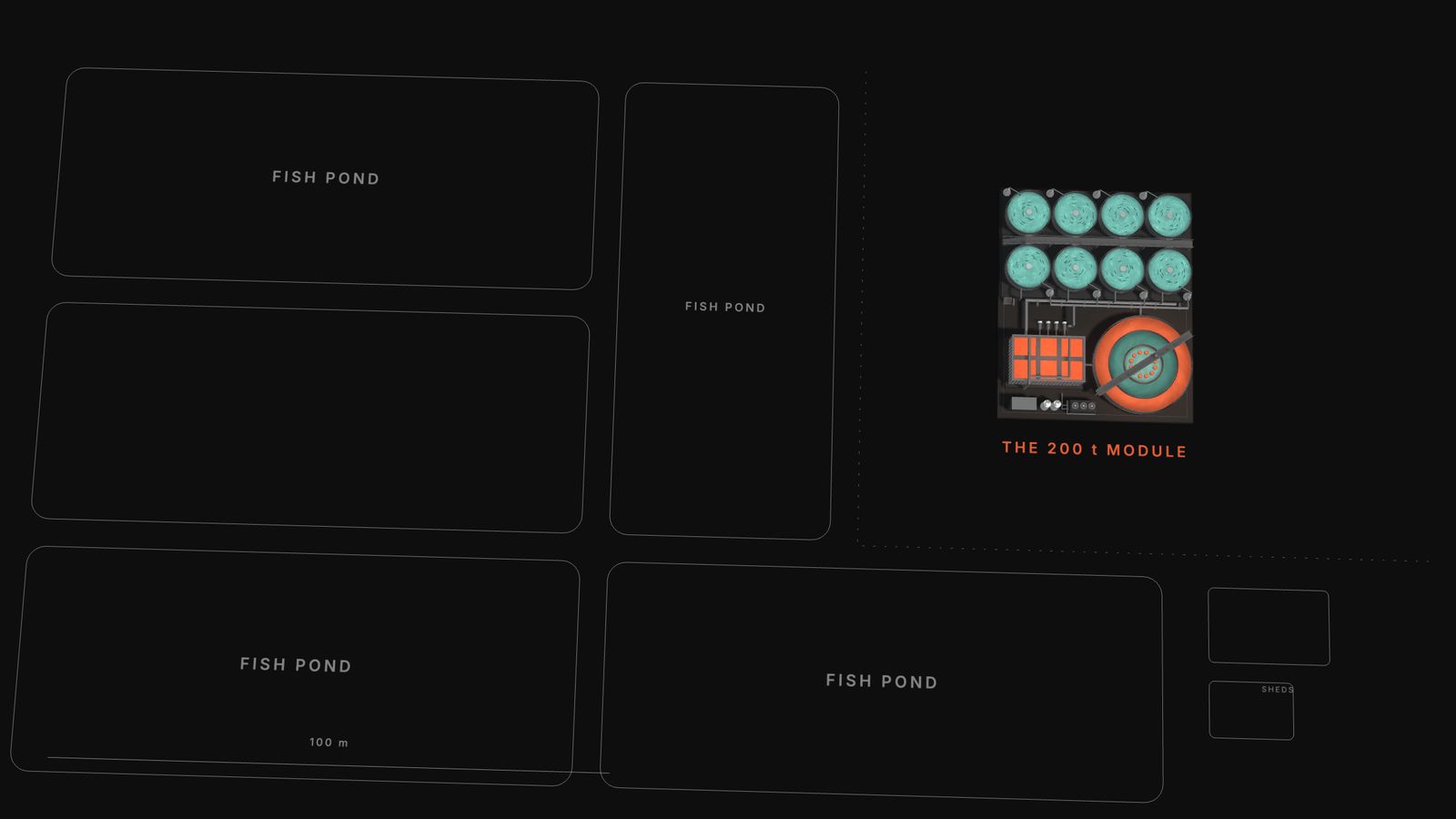
Example: a pond farm, seen from above
The module takes one corner. You own it. Run it yourself, or with a farmer. We watch over it, day and night.
InlandOS. One control room.
It watches the water, the fish and the microbiome, around the clock.
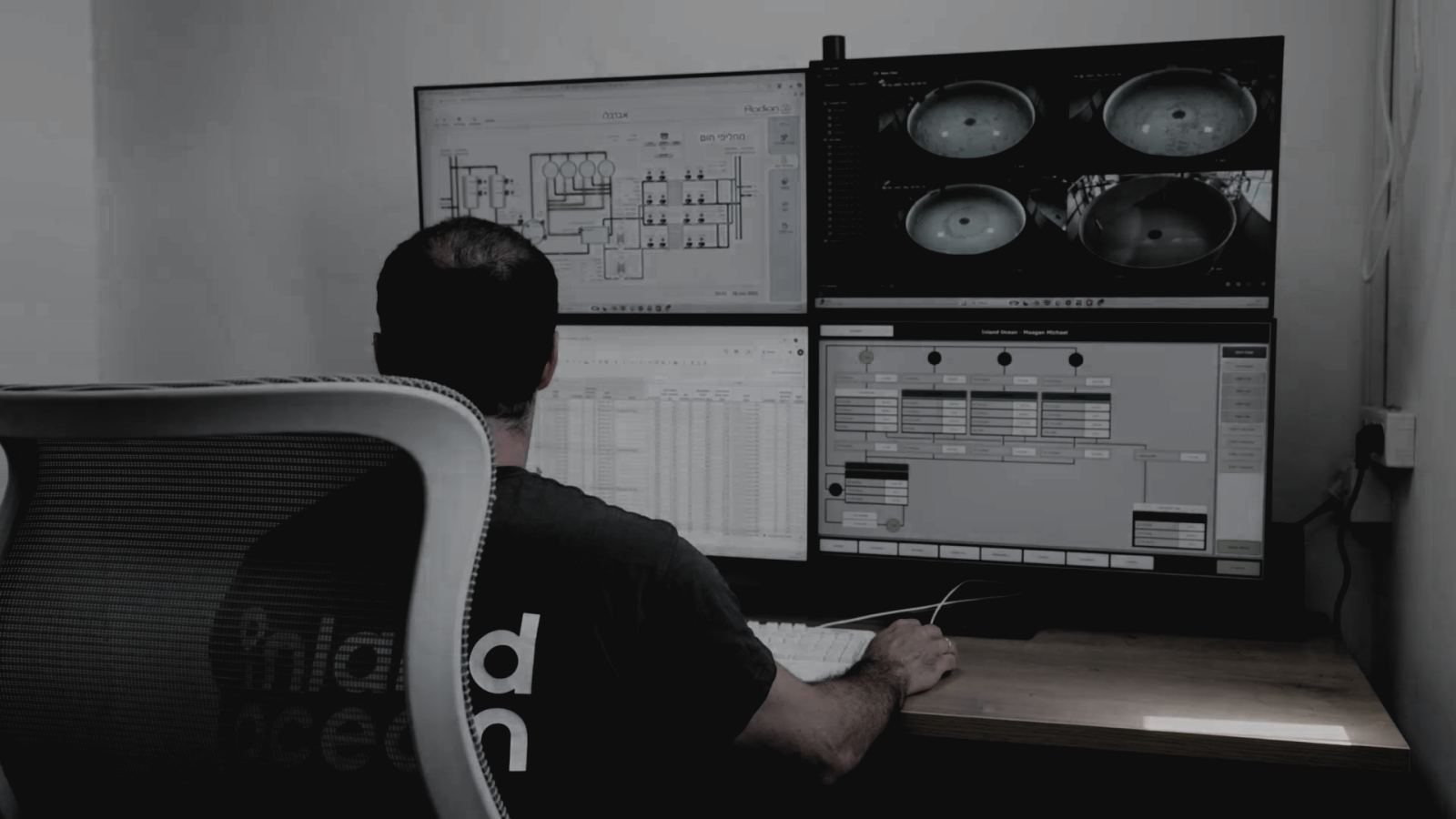
The control room at the Maagan Michael pilot. InlandOS is in development alongside the 200 t module.
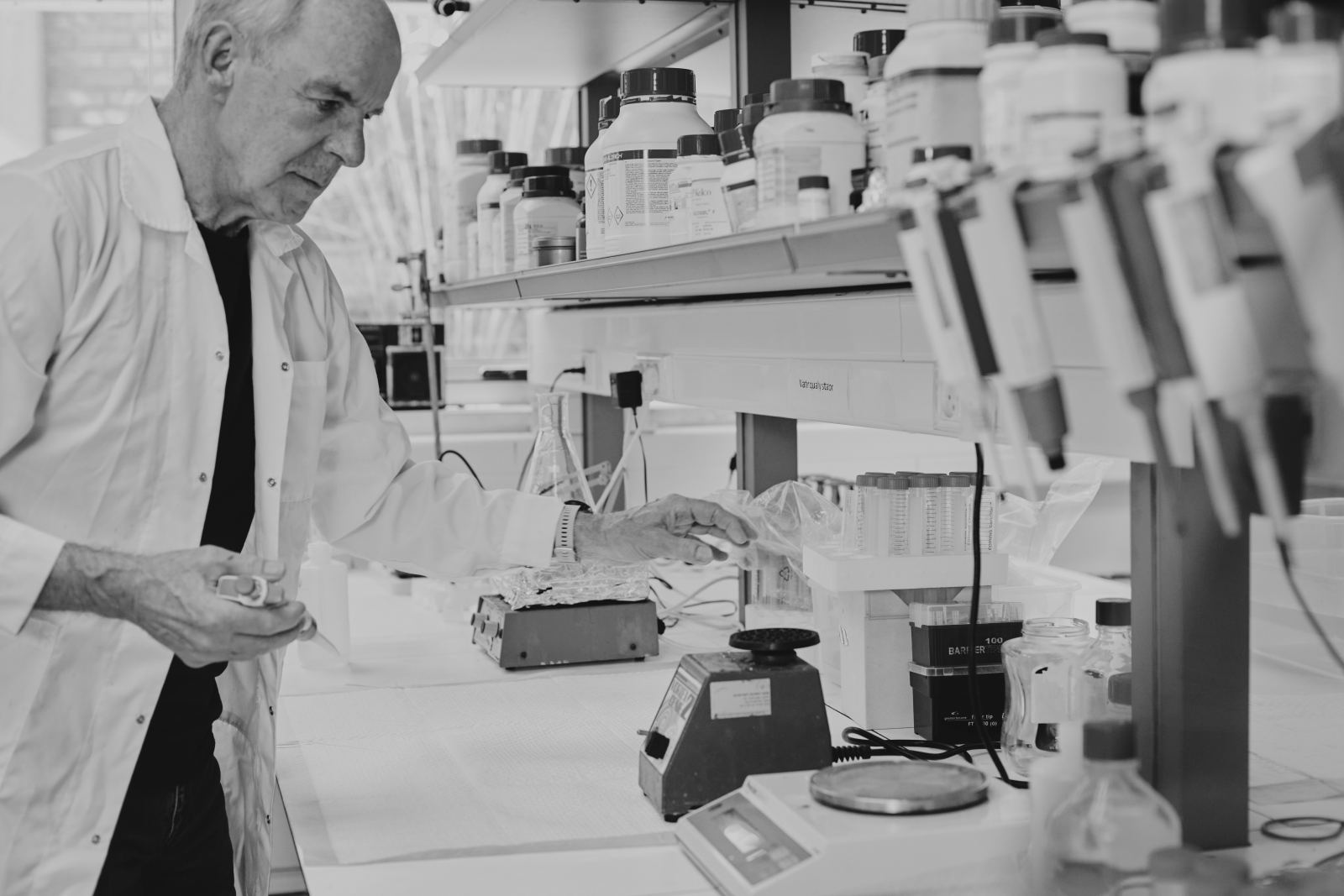
Twenty years of science.
It began with one question: can microbes keep the water clean without replacing it?
Prof. Jaap van Rijn, Hebrew University.
The team
Farming and science, in one company.
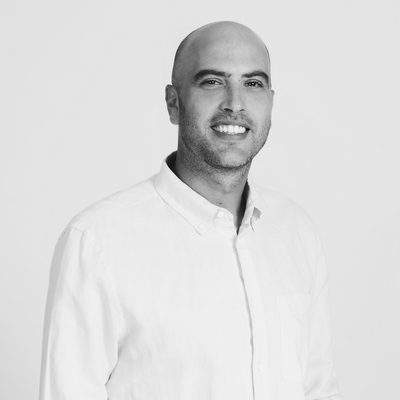

- Meiky TollmanCEO Americas · Washington, DCPartner, CEO and COO at Sabra, 2004 to 2019.
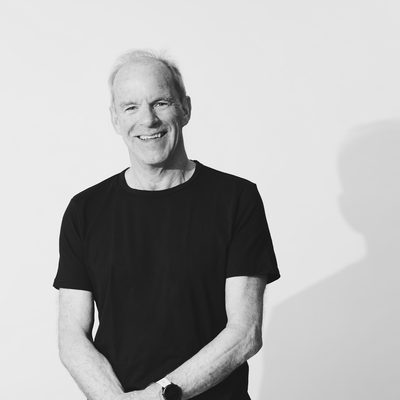
- Hagai MayerVP Engineering · Tel Aviv10 years in water treatment engineering. Formerly at Fluence.
Salmon. Anywhere.
Start with one module. Tell us who you are.
Thank you. We have your message and will be in touch.
- Pilot data: four batches, 2024 to 2026, at Maagan Michael, in a pilot built for 27 t HOG a year. Benchmarks: about 36 months from hatch to harvest in conventional farming; Norway 2020 feed conversion 1.25 to 1.35 (Aas et al., 2022). Feed conversion is on live weight.
- FAO and NOAA: United States salmon imports, 500,753 t in 2023.
- Maagan Michael pilot. Fresh water replaces evaporation only: about 50 L per kg of fish, head-on gutted (HOG).
- Target design figures for the standard 200 t module, which is in engineering through 2027.
- Estimated price for the standard 200 t module. It varies with the site. No module has been built yet. Not an offer.